Understanding React Server Components in Next.js 15
Understanding React Server Components in Next.js 15
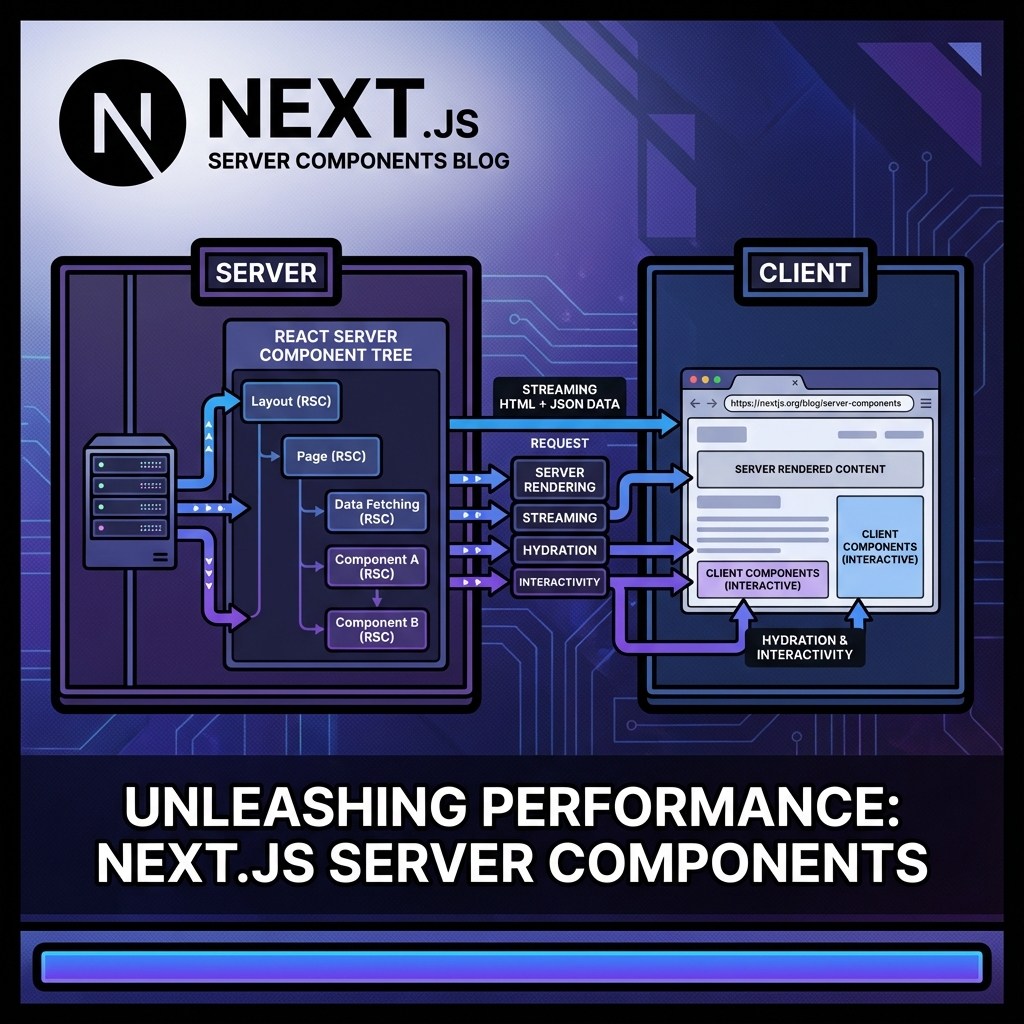
React Server Components fundamentally change how we think about building web applications. Instead of sending all component logic to the browser, you can keep some logic on the server.
What are Server Components?
Server Components are React components that run exclusively on the server. They never execute in the browser, which means:
When to Use Server Components
- No JavaScript sent to the browser for these components
- Direct access to backend resources (databases, private APIs)
- Sensitive data stays on the server
- Reduced client-side JavaScript bundle size
Use Server Components when you need to:
Client Components Still Matter
- Access databases or backend APIs directly
- Keep sensitive information server-side
- Reduce JavaScript sent to the client
- Use libraries that depend on server-only features
Client Components are essential for interactivity:
Best Practices
- Form inputs and submissions
- Event listeners (click, change, etc.)
- Hooks like useState, useEffect
- Browser APIs
1. Default to Server Components
2. Use Client Components only for interactivity
3. Keep the component tree as shallow as possible
4. Avoid passing large objects to Client Components
For a practical look at how Server Components integrate with other features, check out our guide on [React Server Actions](/blog/react-server-actions-complete-guide), which complement Server Components perfectly for handling data mutations.
Server Components represent a paradigm shift in React development. Embrace them as your default.
Key Takeaways
Frequently Asked Questions
What are React Server Components?
- **Server-First by Default**: React Server Components are now the default in Next.js, running exclusively on the server to reduce bundle size.
- **Zero-Bundle Size**: Server Components add zero JavaScript to the client bundle, improving initial page load performance.
- **Direct Backend Access**: Securely access databases and private APIs directly from your components without exposing credentials.
- **Hybrid Architecture**: Seamlessly interleave Server and Client Components to combine performance with interactivity.
React Server Components are components that render exclusively on the server, reducing JavaScript sent to the browser and improving performance.
When should I use Server Components?
Use Server Components when you need direct access to databases, want to keep sensitive data server-side, or need to reduce client-side JavaScript bundle size.
Can Server Components use React hooks?
No, Server Components cannot use React hooks like useState, useEffect, or event listeners. Use Client Components for interactivity.
How do I mark a component as a Client Component?
Add the "use client" directive at the top of your file: `"use client"`
What are the performance benefits of Server Components?
Server Components reduce the JavaScript bundle size, improve initial page load, and enable direct database access without API calls.
Related Articles
Web Performance Optimization: A Practical Guide
Essential techniques for building fast web applications: code splitting, image optimization, and caching strategies.
FrameworkReact Server Actions: Complete Guide with Real-World Examples
Master React Server Actions in Next.js 16. Learn form handling, data mutations, validation, error handling, and security best practices with practical examples.
FrameworkNext.js 16 App Router: Complete Migration Guide from Pages Router
Step-by-step guide to migrate from Next.js Pages Router to App Router. Learn about file structure changes, data fetching patterns, layouts, and common pitfalls.